Weekend Itinerary
Toronto in 3 Days: Practical First-Time Visitor Itinerary
A practical 3-day itinerary for first-time visitors to Toronto, featuring downtown landmarks, vibrant neighbourhood walks, waterfront escapes, and transit routing.
canadaguides.ca editorial desk · August 21, 2026 · 8 min read
Plan your visit
- Best months
- May to October for lakefront walks; year-round for museums
- Getting around
- TTC subway, streetcars, UP Express airport rail, and walking
- Cost structure
- Mix of free public spaces and ticketed venues; check official sites for rates
- Time needed
- 3 full days for central sights and top neighbourhoods
- Accessibility
- Elevator access on subway lines; step-free access at major museums
In short: This three-day itinerary structures your first trip to Toronto into logical geographic clusters: the downtown core on day one, character neighbourhoods on day two, and the waterfront or museum district on day three. It balances top sightlines with practical transit advice so you spend less time commuting and more time exploring.
Fares, entry prices, operating hours, and seasonal schedules change frequently across Toronto attractions and transit networks. We link directly to official operator and government portals throughout this guide so you can verify current schedules and ticket policies before setting out.
Toronto 3-Day Highlights compared
| Attraction | Best for | Suits | Typical visit | Cost type | Parking | Stroller access | Best season |
|---|---|---|---|---|---|---|---|
| CN Tower | Panoramic city views | All ages | A couple of hours | Paid ticket | Paid, off-site | Fully accessible | Year-round |
| St. Lawrence Market | Local food tasting | All ages | Quick stop | Free entry | Paid, off-site | Stroller accessible | Year-round |
| Royal Ontario Museum | History and natural science | All ages | Half day | Paid ticket | Paid, off-site | Fully accessible | Year-round |
| Kensington Market | Pedestrian browsing | School age, adults | A couple of hours | Free entry | Paid street parking | Paved streets, narrow sidewalks | Spring to autumn |
| Toronto Islands | Skyline views and parkland | All ages | Half day to full day | Free park, paid ferry | Paid, off-site at terminal | Fully accessible on ferries | Late spring to autumn |
| Art Gallery of Ontario | Canadian and modern art | Teens and adults | A couple of hours | Paid ticket | Paid, off-site | Fully accessible | Year-round |
Our picks
Our editorial recommendations highlight the best options depending on your travel group and the weather:
- Best for first-timers: CN Tower observation level for an immediate orientation of the GTA skyline and Lake Ontario.
- Best for repeat visitors: Exploring Kensington Market and the surrounding West Queen West galleries.
- Best free option: Walking through St. Lawrence Market and along the Harbourfront Boardwalk.
- Best rainy-day option: Exploring the Royal Ontario Museum followed by the sheltered PATH underground network.
- Best full-day outing: Taking the ferry to Centre Island for park walking, cycling, and city skyline photographs.
Day 1: Downtown Core and Waterfront Highlights
Start your first morning in the core along Front Street. St. Lawrence Market offers a practical starting point where vendors serve hot peameal bacon sandwiches, fresh pastries, and regional produce. After exploring the market floors, walk west along Front Street toward Union Station and the Financial District towers.
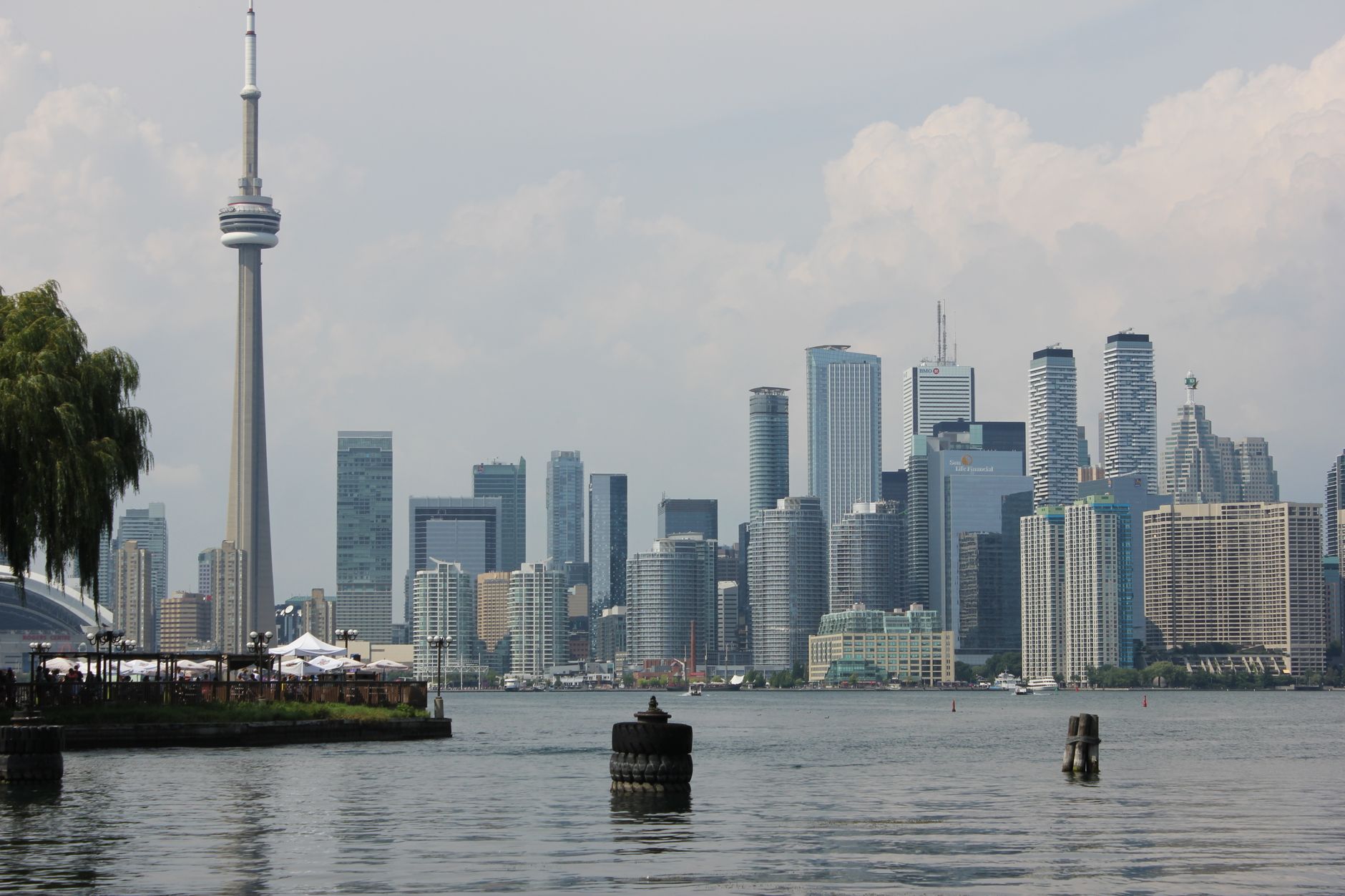
Head south toward the South Core district to visit the CN Tower and Ripley's Aquarium of Canada. Booking timed tickets in advance for high-demand downtown attractions reduces wait times during peak hours. From the base of the tower, cross the rail corridor footbridge toward Harbourfront Centre. The promenade along Lake Ontario provides continuous pedestrian pathways, public boat docks, and views across the inner harbour.
For evening dining, walk east to the Distillery Historic District. This pedestrian precinct features preserved historic industrial architecture, craft breweries, art galleries, and outdoor patios. It is easily reached on foot from the waterfront or via local streetcar routes.
Day 2: Historic Neighbourhoods and Cultural Hubs
Dedicate your second day to Toronto's diverse neighbourhoods north of the financial core. Begin at the Royal Ontario Museum along Bloor Street. The museum showcases global culture and natural history exhibits housed within its distinctive architectural design.
From Bloor Street, walk south through the University of Toronto St. George campus toward College Street. Continue west to Kensington Market, a compact neighbourhood of Victorian row houses filled with vintage clothing boutiques, independent coffee roasters, and international food stalls. Kensington Market is adjacent to Chinatown along Spadina Avenue, making it easy to sample dim sum or hand-pulled noodles on the same walk.
Spend your late afternoon moving west along Queen Street West or Dundas Street West toward Trinity Bellwoods Park. This corridor is lined with independent fashion retailers, design shops, and local bakeries. For extra context on local arts and dining, consult our broader guide to Toronto attractions or review our weekend 2-day plan.
Day 3: Toronto Islands or Cultural Alternatives
Your final day offers a choice between outdoor lakefront parkland or world-class art institutions. If weather permits, take the public ferry from the Jack Layton Ferry Terminal at the foot of Bay Street to the Toronto Islands. The Toronto Islands ferry service departs downtown from the Jack Layton Ferry Terminal at the foot of Bay Street. Ferries run to Centre Island, Ward's Island, and Hanlan's Point. Centre Island features extensive green space, rental bike paths, quiet beaches, and the family-friendly Centreville Amusement Park.
If rain or cold weather intervenes, switch to an indoor cultural day. Visit the Art Gallery of Ontario on Dundas Street West to view extensive collections of Canadian, Indigenous, and European art. From there, explore the PATH underground network. The PATH is an underground pedestrian walkway network connecting downtown office towers, subway stations, and retail centers. It provides miles of climate-controlled walking routes across the central core.
To plan additional regional excursions beyond the city limits, check our Ontario guides and dedicated Toronto travel guide.
Public Transit and Airport Connections
Toronto features an extensive public transit network operated by the Toronto Transit Commission (TTC). You do not need a vehicle to complete this 3-day itinerary. The TTC subway network centers around two main line routes: Line 1 Yonge-University and Line 2 Bloor-Danforth. Line 1 forms a U-shape through the downtown core, connecting Union Station, Dundas, College, and Bloor-Yonge stations.
Fares across the TTC subway, streetcar, and bus system use contactless payment cards, mobile wallets, or PRESTO cards. Tap your card or phone upon entering subway stations or board streetcars and buses. Transfer rules allow continuous travel within a designated duration. Transit fares change periodically — see the official Toronto Transit Commission website for current pricing and fare rules.
Arriving from Toronto Pearson International Airport is straightforward. UP Express connects Toronto Pearson International Airport directly to Union Station in downtown Toronto. Trains run regularly throughout the day with short travel times between the terminal and downtown. Check the official UP Express website for current train schedules and ticket options.
Parking Reality and Driving in Downtown Toronto
We find driving in downtown Toronto inefficient for short visits. Street parking is strictly regulated, expensive, and limited by peak-hour rush lane restrictions. Construction projects, streetcar tracks, and high pedestrian volume create frequent delays across major thoroughfares like King Street, Queen Street, and Bay Street.
If you arrive by vehicle, park it at your hotel garage or in a municipal Green P parking lot for the duration of your stay. Municipal parking details and garage locations are listed on the official Green P Toronto Parking Authority portal. Use public transit or walk between daytime attractions.
Costs and Budget Planning
Visiting Toronto requires accounting for accommodation, attractions, dining, and transit. Expect paid tickets for major attractions such as the CN Tower, Royal Ontario Museum, and Art Gallery of Ontario. Several city pass programs bundle admission to major landmarks at a reduced overall rate. Check official attraction sites or city pass operators to compare bundle pricing.
Many of Toronto's best experiences are low-cost or free. Walking through Kensington Market, exploring the St. Lawrence Market concourse, strolling along Harbourfront, and visiting Toronto Island public parks incur no admission charge. Food options range from budget street eats in Chinatown and market stalls to upscale dining in Yorkville and the Financial District.
Seasonal Timing and Weather Planning
Summer brings warm weather, outdoor patio dining, festival events, and high visitor numbers along the waterfront. Spring and autumn offer milder temperatures, smaller crowds at major museums, and pleasant walking weather through neighbourhood shopping streets.
Winter brings cold temperatures and snow, but the city remains fully functional. Indoor attraction venues, covered ice rinks, and the subterranean PATH system offer comfortable sightseeing choices. If traveling during the colder months, read our specialized family trip guide or our Toronto winter planning guide.
Seasonal opening hours and ferry departure schedules vary throughout the year — confirm details on the official City of Toronto Parks and Recreation portal before traveling.
Families, Accessibility, and What to Skip
Toronto is generally very accessible for strollers and wheelchairs. Modern TTC subway stations feature elevator access, and low-floor streetcars serve major surface routes. Major institutions like the Royal Ontario Museum and Ripley's Aquarium provide step-free entry, accessible washrooms, and elevator coverage across display floors.
For families traveling with younger children, prioritize Ripley's Aquarium, the Toronto Islands parks, and the High Park zoo and playground areas. If pressed for time on a 3-day trip, we advise skipping distant attractions like the Zoo or Canada's Wonderland unless your group specifically requests them, as the transit commute takes time away from central neighbourhood walks.
What to Know Before You Go
- Book advance tickets: Purchase admission online for the CN Tower and Ripley's Aquarium to bypass long ticket lines on summer weekends.
- Use contactless transit payment: Tap your credit card or mobile phone at TTC turnstiles and streetcar doors to avoid buying single tokens.
- Pack comfortable walking shoes: Expect to walk several kilometers each day through character neighbourhoods and waterfront parks.
- Check ferry schedules: Public ferry sailings to Ward's Island and Centre Island operate on seasonal frequency; check schedules on the city portal before heading to the terminal.
Questions travellers ask
- Is 3 days enough time to visit Toronto?
- Three days is ideal for a first visit. It allows you to cover major downtown attractions like the CN Tower and St. Lawrence Market on day one, explore character neighbourhoods like Kensington Market on day two, and spend day three on the Toronto Islands or inside world-class museums.
- Do I need a car for a 3-day Toronto trip?
- No, a car is unnecessary and often inconvenient in central Toronto due to parking costs and street traffic. The TTC subway, streetcars, and UP Express airport connection make public transit the most efficient way to navigate the core.
- What is the best way to get from Pearson Airport to downtown Toronto?
- The UP Express train provides a direct link between Toronto Pearson International Airport and Union Station in downtown Toronto. Trains run frequently throughout the day and bypass highway traffic entirely.
- What should I do in Toronto if it rains?
- On rainy days, pivot to indoor cultural venues such as the Royal Ontario Museum, Art Gallery of Ontario, or Ripley's Aquarium of Canada. You can also navigate through the sheltered PATH underground pedestrian network connecting core shopping complexes and subway hubs.
Sources & official links
Check before you go
- Toronto Transit Commission (TTC)
Official transit maps, service alerts, and contactless fare information.
- UP Express
Airport rail link schedules and ticket details between Pearson and Union Station.
- City of Toronto - Toronto Island Park
Official ferry schedules, park amenities, and island visitor guidelines.
- Royal Ontario Museum (ROM)
Exhibition hours, advance ticket booking, and accessibility services.
- Green P Parking
Municipal parking lot map and current garage rates across Toronto.
Keep reading
- Toronto Weekend Guide: How to Spend 2 Days
- Toronto at Christmas: Things to Do and Planning Guide
- How Many Days Do You Need in Toronto? Realistic Itinerary Guide
- Romantic Things to Do in Toronto: A Couples Planning Guide
- Best Things to Do in Downtown Toronto: Practical Visitor Guide
- Best Day Trips from Toronto: Practical Planning Guide