Things To Do
What to Do in Banff on a Rainy Day: Practical Planning Guide
When rain hides summit views, pivot to Banff's historic indoor sites, hot springs, and low-elevation drives with practical transit and parking strategies.
canadaguides.ca editorial desk · August 21, 2026 · 8 min read
Plan your visit
- Best rainy options
- Cave and Basin, Banff Park Museum, Whyte Museum, Hot Springs
- Getting around
- Roam Transit routes 1 and 2 directly serve key attractions
- Parking strategy
- Free parking at Banff Train Station; paid parking downtown
- Cost shape
- Ticketed indoor sites; check Parks Canada for current rates
- Good for
- Families, history enthusiasts, thermal bathers, road trippers
Rain in the Canadian Rockies turns high-alpine trails into slippery mud chutes and pulls thick cloud decks down over mountain peaks. When low ceilings hide the summits, hiking above treeline becomes cold and unrewarding. This guide helps travellers pivot smoothly from outdoor itineraries to indoor historic sites, thermal pools, and low-elevation valley drives. If you are building a broader itinerary, see our Banff destination hub and our comprehensive Things to Do in Banff: A Practical Planning Guide.
In short: When rain hits Banff, swap summit hikes for indoor historic sites like Cave and Basin, thermal soaking at Banff Upper Hot Springs, or low-elevation scenic drives along Bow Valley Parkway. Use local Roam Transit to hop between downtown galleries on Bear Street and thermal pools on Sulphur Mountain without dealing with vehicle parking.
Fees, transit fares, operating hours, and seasonal schedules across Banff National Park change without notice. This guide links directly to official operators and government pages so you can verify current entry requirements and ticket pricing before setting out.
Banff rainy day attractions compared
| Attraction | Best for | Suits | Typical visit | Cost type | Parking | Stroller access | Best season |
|---|---|---|---|---|---|---|---|
| Cave and Basin National Historic Site | Park history and thermal vents | All ages | A couple of hours | Paid ticket | Free on-site parking | Step-free indoor paths | All year |
| Banff Park Museum | Victorian natural history exhibits | School age | Quick stop | Paid ticket | Downtown pay parking | Step-free ground level | All year |
| Whyte Museum of the Canadian Rockies | Mountain culture and heritage art | Teens and adults | A couple of hours | Paid ticket | Downtown pay parking | Fully step-free | All year |
| Banff Upper Hot Springs | Outdoor thermal soaking in mountain air | All ages | A couple of hours | Paid ticket | Free on-site parking | Accessible pool entry | All year |
| Banff Gondola Summit Building | Indoor dining and interactive exhibits | All ages | Half day | Paid, book ahead | Free on-site parking | Fully accessible building | All year |
| Lake Minnewanka Scenic Drive | Valley views from your vehicle | All ages | Quick stop | Free, paid parking | Free at lake lots | Accessible paved viewpoints | Spring to autumn |
| Bow Valley Parkway Scenic Drive | Wildlife spotting along low-elevation forest | All ages | Half day | Free | Free turnout parking | Variable trail pullouts | All year |
Our picks
Our picks reflect our editorial recommendations for making the most of rainy weather in Banff National Park.
- Best for toddlers: Cave and Basin National Historic Site, where interactive exhibits, low-strain boardwalks, and warm thermal vents keep young children engaged without outdoor exposure.
- Best for older kids: Banff Park Museum, featuring glass cases filled with taxidermy wildlife specimens that bring local fauna up close.
- Best free option: Lake Minnewanka and Bow Valley Parkway scenic drives, allowing you to take in mountain landscapes and watch for elk from the warmth of your vehicle.
- Best rainy-day option: Whyte Museum of the Canadian Rockies, which offers quiet galleries dedicated to pioneer heritage, alpine art, and mountaineering history right in downtown Banff.
- Best full-day outing: Combining Sulphur Mountain thermal soaking at Banff Upper Hot Springs with an afternoon exploring the shops and eateries on Bear Street.
When rain falls in Banff
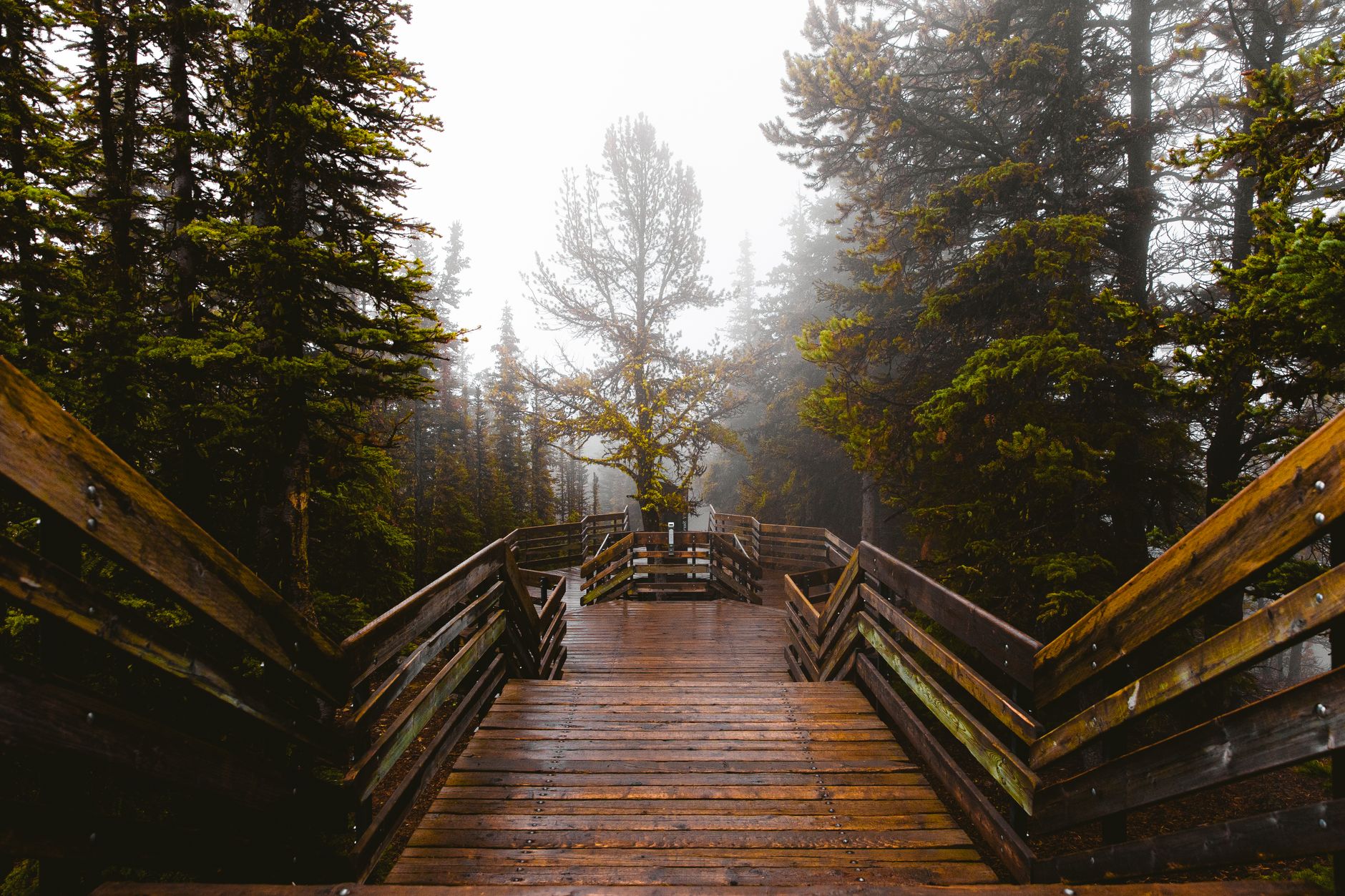
Mountain weather changes rapidly, and summer rainstorms frequently roll through the Bow Valley. High-altitude trails like Sentinel Pass or Fairview Lookout turn slick and muddy during heavy downpours, while alpine passes become obscured by cloud cover. Spring and autumn bring rain-snow mixes at upper elevations, making trail rocks treacherous.
Our advice: save summit hikes for clear mornings and pivot to valley floor attractions when clouds drop below mountain ridges. Rainy days often bring dramatic cloud hangs across the Sawback Range and Mt. Rundle, creating excellent photography opportunities from valley pullouts.
Getting around in the rain
Driving between attractions in wet weather is straightforward, but finding street parking in downtown Banff can be frustrating when everyone retreats indoors. Local public transit provides a clean, reliable alternative that drops you right at indoor destination doors.
The Bow Valley Regional Transit Services Commission operates Roam Transit, connecting downtown Banff with major sites. Roam Transit Route 1 runs directly between downtown Banff and Sulphur Mountain attractions, including Banff Upper Hot Springs and the Banff Gondola. Roam Transit Route 2 serves Cave and Basin National Historic Site. Single-ride fares and day passes are available on board or via mobile apps; check the official transit site for current fare options. For a complete guide to travelling without a personal car, read our Banff Without a Car: Practical Transit and Shuttle Travel Guide.
Parking strategy when weather turns wet
Our advice: expect downtown street parking to fill rapidly when visitors gather in shops and cafes along Banff Avenue and Bear Street. Central street parking operates under a paid parking system managed by the municipality.
To avoid circling downtown blocks, park at the Banff Train Station visitor lot off Norquay Road. Free visitor parking is provided at Banff Train Station, offering a short, flat walking route to Bear Street or direct access to Roam Transit buses. At Sulphur Mountain, free on-site parking is available for visitors to Banff Upper Hot Springs and the Banff Gondola, though spaces can be limited during peak afternoon hours. Check the official Town of Banff Parking page for current rates and real-time parking availability.
What to do on a rainy day in Banff
Banff townsite holds several high-quality indoor spaces that provide context on the history, culture, and natural environment of the Canadian Rockies.
Cave and Basin National Historic Site
Located along Cave Avenue west of downtown, Cave and Basin National Historic Site marks the founding location of Canada's national parks system. Visitors can enter an underground rock cavern to view natural thermal springs and explore interactive museum galleries detailing early park history. Outside, sheltered boardwalk paths wind around warm mineral pools that shelter unique local snail populations.
Banff Park Museum National Historic Site
Situated beside the Bow River Bridge on Banff Avenue, Banff Park Museum National Historic Site is housed in a 1903 log building displaying natural history collections. The multi-level wooden structure houses extensive taxidermy displays of birds, mammals, insects, and mineral specimens preserved in classic glass cases. It is a compact, dry stop that appeals particularly to school-age children and historic architecture enthusiasts.
Whyte Museum of the Canadian Rockies
Set along Bear Street, the Whyte Museum of the Canadian Rockies features regional mountain culture, wilderness art, and historical collections. Its rotating art galleries highlight historic alpine paintings alongside contemporary regional artwork, while permanent heritage exhibits detail early guide culture and mountaineering expeditions. It is one of the quietest and most reflective indoor spaces in Banff.
Banff Upper Hot Springs
Soaking in outdoor thermal waters while cool mountain rain falls overhead is a classic Banff experience. Banff Upper Hot Springs is operated by Parks Canada and features outdoor thermal mineral water pools on Sulphur Mountain. Visitors can typically obtain swimsuit and towel rentals at the facility. We recommend arriving early in the morning or later in the evening to avoid peak afternoon outdoor deck queues.
What to skip: Gondola visits in heavy cloud
The Banff Gondola ascends Sulphur Mountain to an impressive summit building featuring multi-level interactive exhibits, an interpretive theatre, and indoor dining. However, when cloud cover drops below the mountain crest, visibility from the summit deck drops to zero. If thick fog blankets the valley, paying for a gondola ticket yields viewless grey windows. We recommend checking live summit webcams on the Banff Jasper Collection by Pursuit website before buying tickets.
Scenic rain drives with short stops
If you prefer touring by car, low-elevation valley drives keep you sheltered while delivering views of cloud-wreathed mountain faces. Explore our detailed guide on the Best Scenic Drives Around Banff: Practical Road Trip Guide.
- Bow Valley Parkway (Highway 1A): Running parallel to the Trans-Canada Highway between Banff and Lake Louise, this two-lane scenic corridor winds through thick pine forests and limestone outcrops. Low-speed travel offers good opportunities to spot elk and bighorn sheep near road pullouts.
- Lake Minnewanka Scenic Drive: This loop drive north of Banff townsite circles past Cascade Ponds, Two Jack Lake, and the shores of Lake Minnewanka. Covered picnic shelters at Cascade Ponds offer dry spots for a quick break.
Costs and budget planning for rainy days
Indoor attractions in Banff generally require paid individual admission, but overall day costs remain manageable compared to high-ticket outdoor adventures.
- National Park Pass: Entry to Banff National Park requires a Parks Canada Discovery Pass or daily park pass, regardless of weather. Purchase passes at park gates or the Banff Visitor Centre on Banff Avenue.
- Museum and Historic Site Tickets: Entry fees for Cave and Basin, Banff Park Museum, and Whyte Museum are charged separately. Parks Canada offers bundled admission options for federal historic sites; check the official Parks Canada website for current ticket structures.
- Thermal Pools and Gondola: Banff Upper Hot Springs uses a single-entry ticket system with optional rental fees for gear. The Banff Gondola uses dynamic ticket pricing based on season and demand; check Pursuit's official page to confirm current pricing before booking.
Family strategies for wet weather
Keeping children comfortable during wet weather requires planning around indoor transition times and warm breaks. Families visiting with young children should consult our broader guide to Banff with Kids: Practical Family Guide.
- Stroller Realities: Cave and Basin provides level indoor flooring and accessible wooden boardwalks outdoors. Banff Park Museum provides step-free access across its lower level, while balcony areas are reached via stairs. The Whyte Museum is fully accessible on one ground level.
- Indoor Duration: Young children typically spend forty-five minutes to an hour exploring Banff Park Museum or Cave and Basin before needing a break. Pair a morning museum stop with lunch on Bear Street to keep energy levels balanced.
- Washroom Facilities: Clean public washrooms are available at Cave and Basin, Banff Park Museum, Whyte Museum, Banff Upper Hot Springs, and the Banff Visitor Centre.
Accessibility on wet days
Rainy days make step-free routes and sheltered transit stops particularly valuable for travellers with limited mobility.
- Attraction Access: Cave and Basin, Whyte Museum, and the Banff Gondola summit building feature step-free entrances, automatic doors, and accessible washroom stalls. Banff Upper Hot Springs features accessible pool entry facilities; we advise checking with Parks Canada ahead of your visit to confirm available equipment.
- Transit and Parking Access: Roam Transit vehicles are equipped with accessible low-floor entries and ramps for strollers and mobility devices. Designated accessible parking spaces are provided at Banff Train Station, Cave and Basin, and Sulphur Mountain parking lots.
Where to dry off: Food, shops, and nearby Canmore
When downpours intensify, downtown Banff's dining and retail hubs offer excellent indoor shelter.
- Bear Street District: Running parallel to Banff Avenue, Bear Street features pedestrian-friendly plazas, indoor cafes, craft bakeries, and comfortable restaurants. We find it is generally quieter and less crowded than Banff Avenue during rainy afternoons.
- Banff Avenue Shopping: Covered gallerias and indoor arcades along Banff Avenue house outdoor gear shops, bookstores, and local art galleries, making window shopping an easy way to pass an hour between showers.
- Day Trip to Canmore: Located a short drive east of Banff via the Trans-Canada Highway, the town of Canmore sits outside national park boundaries and offers a thriving indoor food scene, artisan bakeries, and local indoor climbing facilities at the Elevation Place recreation centre.
Safety and trail warnings in wet conditions
While valley floor sightseeing is safe in wet weather, rain introduces distinct hazards along mountain trails that every visitor should understand.
- Slippery Limestone: Trails featuring exposed limestone steps or wooden staircases—such as Johnston Canyon or Tunnel Mountain—become slick when wet. Wear sturdy footwear with deep tread even on short walks.
- Mud and Trail Erosion: Clay-heavy soils on routes like Sulphur Mountain Trail turn into heavy mud, making climbs tedious and contributing to trail damage. Stay on marked paths rather than stepping onto fragile alpine vegetation to bypass puddles.
- Rockfall and Flash Runoff: Heavy rainfall increases the risk of loose rockfall along canyon walls and mountain scree slopes. Avoid lingering under steep cliffs during active rainstorms.
- Hypothermia Risk: Mountain rain accompanied by wind can drop body temperatures rapidly, even in summer. Always carry a waterproof shell and insulating mid-layer in your daypack.
Questions travellers ask
- What is the best indoor activity in Banff during rain?
- Cave and Basin National Historic Site and the Whyte Museum of the Canadian Rockies are excellent choices. Both offer rich cultural context and step-free indoor spaces that keep you completely out of the weather.
- Is the Banff Gondola worth visiting when cloud cover is heavy?
- If clouds rest low over Sulphur Mountain, summit visibility drops to zero, yielding grey views from the observation decks. Check live webcams before buying tickets to ensure the valley floor is visible.
- Are the Banff Upper Hot Springs open when it rains?
- Yes, thermal bathing in cool rain is a favourite local activity. The outdoor pool remains open during normal rainstorms, though operations pause briefly if lightning is detected in the area.
- How do I get around Banff without driving in wet weather?
- Roam Transit buses run frequently throughout Banff townsite. Route 1 connects downtown directly to Sulphur Mountain hot springs and gondola facilities, while Route 2 stops at Cave and Basin.
- Which scenic drives near Banff are good on rainy days?
- Bow Valley Parkway (Highway 1A) and Lake Minnewanka Scenic Drive offer excellent low-elevation views from your vehicle, with frequent opportunities to view cloud formations and local wildlife.
Sources & official links
Check before you go
- Parks Canada Banff National Park
Official park management and updates
- Cave and Basin National Historic Site
Official historical site planning page
- Roam Transit
Official transit routes and fare updates
- Town of Banff Parking
Official downtown parking map and rates
- Whyte Museum of the Canadian Rockies
Official gallery and museum schedules
- Banff Upper Hot Springs
Official thermal bath information
Keep reading
- Things to Do in Banff: A Practical Planning Guide
- Banff for First-Time Visitors: What to Know Before You Go
- Visiting Moraine Lake: Practical Planning Guide
- Lake Louise Day Trip: Practical Planning Guide
- Best Scenic Drives Around Banff: Practical Road Trip Guide
- Best Easy Hikes in Banff for Beginners: Low Elevation Gain Trails