Local Tips
Niagara Falls, Ontario: First-Timer's Trip Planning Guide
Everything first-time visitors need to plan a trip to Niagara Falls, Ontario, including attraction trade-offs, public transit options, parking advice, and border basics.
canadaguides.ca editorial desk · October 21, 2026 · 8 min read
Plan your visit
- Best months
- May to October for full attraction schedules; winter for illuminations
- Getting around
- WEGO shuttle network, GO Transit, or driving via QEW
- Cost
- Free parkland access; ticketed attractions and bundled passes available
- Good for
- First-time visitors, families, outdoor sightseers, day trippers
- Time needed
- One full day minimum; two days recommended
- Accessibility
- Paved river promenade with elevator access at major Niagara Parks venues
Standing at the railing of Queen Victoria Park with mist coating your jacket is the iconic Canadian experience, but navigating Niagara Falls for the first time requires separating natural conservation from commercial spectacle. The Canadian side delivers the prime panoramic view of both the American Falls and Horseshoe Falls, yet first-timers often struggle with where to park, how to avoid overpriced tourist traps, and how to get around without driving into traffic jams. This guide is written for first-time visitors planning a day trip or weekend getaway to Niagara Falls, Ontario, covering transportation, passes, border crossings, and essential attractions.
In short: First-timers should focus their time along the Niagara Parkway and Niagara Parks attractions for the best views and value, rather than spending all day on Clifton Hill. Plan to spend at least one full day, use local public transit to avoid moving your car between lots, and purchase an official attraction pass if you plan to visit multiple sites.
Fees, fares, operating hours, and seasonal schedule dates for attractions, parking, and transit change frequently throughout the year. To ensure you have accurate information before traveling, this guide links directly to the official operator or government agency pages for every site, service, and pass mentioned.
Niagara Falls attractions compared
| Attraction | Best for | Suits | Typical visit | Cost type | Parking | Stroller access | Best season |
|---|---|---|---|---|---|---|---|
| Queen Victoria Park Promenade | Panoramic views | All ages | Quick stop | Free | Paid parking | Paved ramps | Spring to Autumn |
| Niagara City Cruises | Boat voyage to mist | All ages | A couple of hours | Paid, book ahead | Paid parking | Step-free access | Late Spring to Autumn |
| Journey Behind the Falls | Cave tunnels and portal | School age | A couple of hours | Paid ticket | Paid parking | Elevator access | Year-round |
| Niagara Glen Nature Areas | Gorge hiking trails | Teens and adults | Half day | Free, paid parking | Paid parking | Stairs only | Spring to Autumn |
| Whirlpool Aero Car | Cable car gorge view | School age | Quick stop | Paid ticket | Paid parking | Stair access | Late Spring to Autumn |
| White Water Walk | Boardwalk beside rapids | All ages | Quick stop | Paid ticket | Paid parking | Elevator access | Late Spring to Autumn |
| Butterfly Conservatory | Indoor tropical gardens | Toddlers | A couple of hours | Paid ticket | Paid parking | Step-free access | Year-round |
Our picks
Our editorial recommendations focus on getting maximum value and avoiding crowds during your first visit to the Canadian side of Niagara Falls:
- Best for first-timers: Niagara City Cruises boat tour into the basin of Horseshoe Falls.
- Best for repeat visitors: Hiking the lower trails at Niagara Glen to see the Whirlpool rapids from river level.
- Best free option: Walking the paved promenade along Queen Victoria Park between Table Rock Centre and the Rainbow Bridge.
- Best rainy-day option: The Butterfly Conservatory located on the grounds of the Niagara Parks Botanical Gardens.
- Best full-day outing: Exploring the Niagara Parkway by public transit, combining Journey Behind the Falls, the White Water Walk, and Niagara-on-the-Lake.
When to go to Niagara Falls
Visiting Niagara Falls varies significantly depending on the time of year you choose to travel. Summer brings warm weather and full attraction operating schedules, but it also brings high visitor volume and busy road conditions along the parkway.
Spring and autumn offer milder temperatures, and we find these shoulder seasons ideal for travellers seeking a more relaxed pace and shorter lines at major sites like Table Rock Centre. Many outdoor activities operate fully through these months.
Winter transforms the riverfront with ice formations and night illumination displays. While boat operations and select outdoor cable rides close during colder months, indoor venues, illuminated pathways, and tunnel tours remain active year-round. Check seasonal operational schedules on the official Niagara Parks website prior to setting your dates.
For detailed advice on winter conditions, see our guide on Niagara Falls in winter.
Getting there and getting around
Driving from Toronto to Niagara Falls follows Queen Elizabeth Way (QEW) south around Lake Ontario. Travel times depend heavily on highway traffic, particularly near Hamilton and Burlington.
Public transit provides a direct alternative to driving. GO Transit operates scheduled rail and bus service along the Lakeshore West corridor connecting Toronto's Union Station with the Niagara Falls Bus Terminal. You can review transit route options and schedules on the GO Transit website.
Once in the city, the WEGO transit system serves as a shuttle network for tourists. WEGO lines connect hotel districts, popular entertainment spots, viewpoints like Table Rock, and attractions along the riverfront. Route options include paths along the parkway and routes serving nearby hotel corridors. Fares are structured as multi-day or single-day pass cards; verify route maps and current tap card details on the WEGO Niagara website.
If you are planning a compressed day trip, consult our article on spending one day in Niagara Falls.
Parking reality near the falls
Parking near the falls requires planning, as municipal and parkland rules are strictly enforced. The largest parking facilities closest to Horseshoe Falls are operated by Niagara Parks at Lot A (Table Rock) and Lot B (Rapidsview).
Parking lots along the Niagara Parkway use daily flat-rate or hourly billing systems, depending on proximity to the gorge rim. Our advice is to arrive early on busy summer weekends to secure spots at lots closest to Table Rock, or to park once at an outer lot such as Rapidsview and utilize the WEGO shuttle network to travel between sites along the riverfront.
Details regarding parking locations, electric vehicle charging stations, and payment methods are maintained on the Niagara Parks parking information page.
What to do on a first visit (and what to skip)
A successful first trip involves striking a balance between scenic viewpoints, official conservation attractions, and commercial entertainment.
Iconic waterfall viewpoints
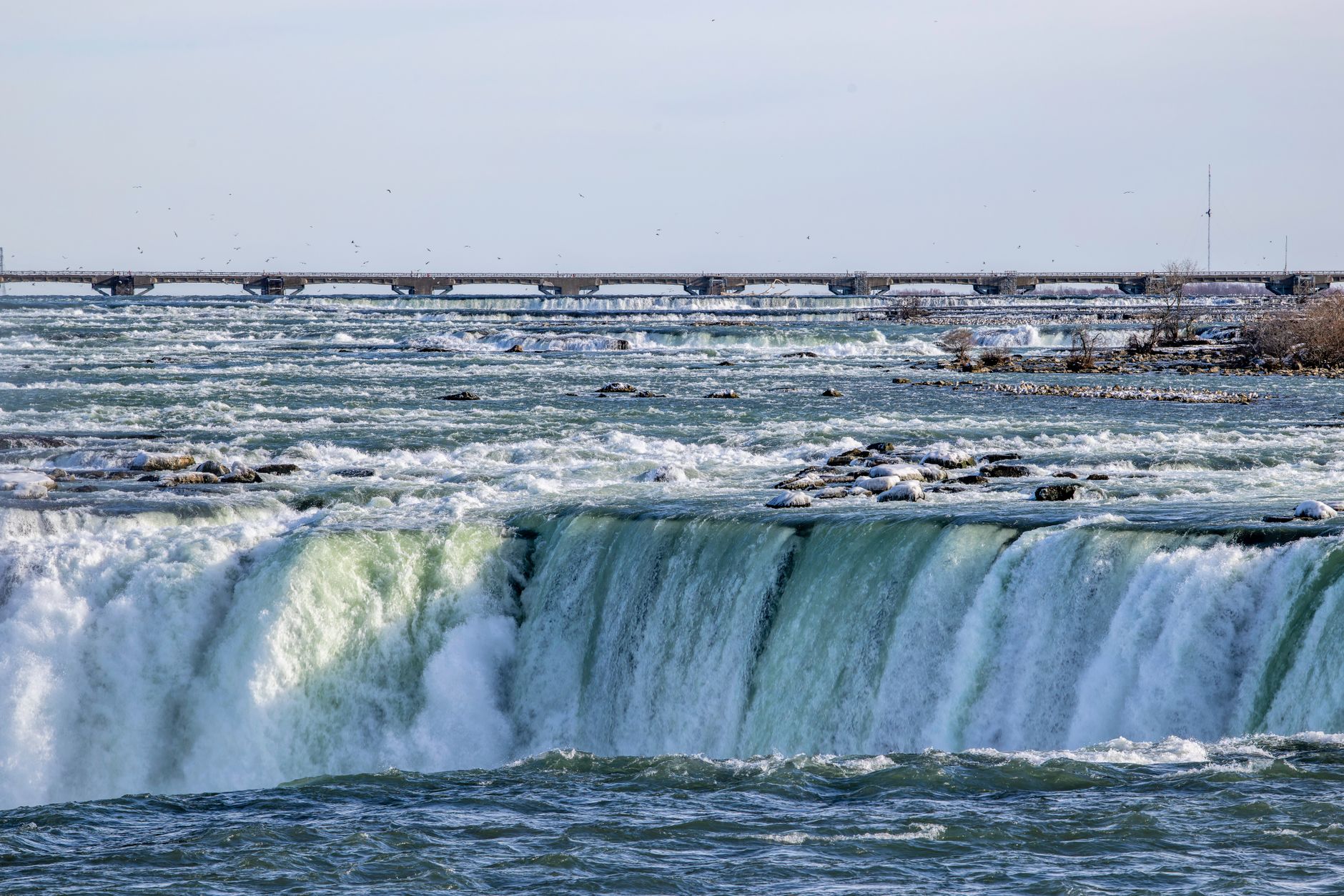
Start at Table Rock Centre to view Horseshoe Falls from the edge where the Niagara River drops over the brink. From Table Rock, follow the paved sidewalk North along Queen Victoria Park toward the Rainbow Bridge to view the American Falls and Bridal Veil Falls across the river gorge.
Key Niagara Parks attractions
Niagara City Cruises operates passenger vessels that travel directly into the mist generated by Horseshoe Falls. Rain ponchos are supplied to passengers. Nearby, Journey Behind the Falls takes visitors down elevator shafts into bedrock tunnels behind the water curtain.
Further downriver along the Niagara Parkway, the White Water Walk offers a boardwalk alongside Class 6 whitewater rapids in the gorge. The Whirlpool Aero Car carries passengers across the river bend suspended in an open cable car.
Commercial entertainment districts
Clifton Hill features arcades, themed restaurants, wax museums, and the Niagara SkyWheel. While popular with young children, Clifton Hill can quickly consume your daily travel budget. Our recommendation is to prioritize natural sites first and treat Clifton Hill as an optional evening stop.
For ideas on avoiding tourist traps, check our local guide on things to do in Niagara Falls.
Passes, costs, and managing your budget
Niagara Falls offers a mix of free public parkland and ticketed attractions. Walking along the Queen Victoria Park promenade, viewing the falls, and exploring the Botanical Gardens grounds carry no admission fee.
Ticketed sites can be purchased individually or bundled into multi-attraction passes issued by Niagara Parks, such as the Niagara Parks Pass or Wonder Pass. Bundled passes include admission to key sites and typically include unlimited rides on the WEGO transit system for a specified timeframe.
Compare pass options and verify ticket rules on the Niagara Parks attraction pass page. To explore low-cost travel ideas, read our guide to the best free things to do in Niagara Falls.
Families and kids advice
Niagara Falls accommodates families with children well, though long walking distances between sites require preparation. The main parkway promenade is paved, broad, and fully stroller-friendly.
Washrooms and infant-care amenities are located inside Table Rock Centre, Queen Victoria Place, and the Butterfly Conservatory visitor center. Dining options near the riverfront range from quick-serve plazas inside Table Rock to sit-down dining along Fallsview Boulevard.
Keep in mind that children may find the thunderous sound and wet mist at Horseshoe Falls intense. Bringing extra clothing layers or rain gear for young children on boat tours and boardwalk walks will make the trip significantly more comfortable.
Accessibility details
The public observation areas along the Canadian side of the Niagara River provide strong physical accessibility features. Paved pathways with gentle gradients run continuous along Queen Victoria Park.
Attractions such as Journey Behind the Falls, Table Rock Centre, the Butterfly Conservatory, and White Water Walk feature elevator access and step-free entry ramps. However, natural trail sites like the Niagara Glen gorge stairs are not step-free and are unsuitable for wheelchairs or strollers.
Accessible parking spaces are designated at official Niagara Parks lots. Service animals are permitted at public sites. For exact accessibility specifications for individual venues, consult the Niagara Parks accessibility guide.
Canadian vs. American side and border basics
First-time visitors frequently ask about the differences between the Canadian and American sides of the falls. The Canadian side offers panoramic, direct views looking into both Horseshoe Falls and American Falls. The American side (Niagara Falls State Park in New York) offers parkland trails directly adjacent to the brink of the American Falls.
Crossing between Canada and the United States is possible via the Rainbow Bridge, located downriver from the main falls view. Pedestrians and passenger vehicles can cross the bridge, provided all travelers possess valid passports and necessary visa travel authorizations.
Border wait times fluctuate, particularly on weekends and holidays. Review entry requirements and current border processing procedures on the official Canada Border Services Agency website and U.S. Customs and Border Protection website.
What to know before you go
Before departing on your first trip to Niagara Falls, keep these practical rules and recommendations in mind:
- Pack waterproof protection: The mist off Horseshoe Falls is heavy and shifts with wind direction; carry a waterproof jacket or poncho to protect electronics.
- Plan for walking: The distance along the paved parkland path from Table Rock Centre down to the Rainbow Bridge requires comfortable footwear.
- Use official transit: Avoid searching for multiple parking spots throughout the day by using WEGO shuttle buses.
- Cross-border travel: Ensure every member of your group carries proper identification and border documentation if planning to cross the Rainbow Bridge.
- Currency and payment: Credit and debit cards are accepted across major venues, transport agencies, and parking pay stations.
If you are planning an extended trip, read our complete Niagara Falls weekend itinerary or explore the broader region through our Ontario provincial guide and Niagara Falls destination hub.
Questions travellers ask
- How many days do you need in Niagara Falls for a first visit?
- One full day is enough to see the main falls viewpoints and experience one or two key attractions like Niagara City Cruises or Journey Behind the Falls. Planning two days allows you to explore the Niagara Glen, visit Niagara-on-the-Lake, and travel without rushing.
- What is the best way to get around Niagara Falls without a car?
- The official WEGO shuttle system is the easiest way to move between hotels, Clifton Hill, Table Rock, and parkway sites. WEGO buses run designated lines along tourist corridors, allowing you to bypass parking hassles.
- Which side of Niagara Falls is better to visit for a first-timer?
- The Canadian side in Ontario offers direct, panoramic views looking into both the American Falls and Horseshoe Falls. The American side in New York offers park trails closer to the water's edge, but the Canadian side provides the classic postcard perspective.
- Do you need to buy tickets in advance for Niagara Falls attractions?
- Advance bookings are strongly recommended during peak summer months for timed-entry experiences like Niagara City Cruises and Journey Behind the Falls. Booking online through the official operator page helps secure preferred departure times and avoids ticket queue delays.
- How much does it cost to view Niagara Falls?
- Viewing the falls from the paved public promenade along Queen Victoria Park is completely free. Individual activities, boat tours, tunnel walks, and parking lots charge separate fees, or can be accessed via official Niagara Parks attraction passes.
Sources & official links
Check before you go
- Niagara Parks Official Site
Official provincial park agency governing attractions, parking, and passes along the river.
- WEGO Transit Network
Official tourist shuttle bus service connecting hotels, parkway, and attractions.
- GO Transit
Regional transit operator providing train and bus connections from Toronto to Niagara Falls.
- Canada Border Services Agency
Official federal portal for border crossing conditions and document requirements.
- City of Niagara Falls
Municipal administration site for city services, local parking, and municipal notices.
Keep reading
- Niagara Falls with Kids: Family Guide
- Niagara-on-the-Lake Day Trip from Niagara Falls: Practical Planning Guide
- What to Do in Niagara Falls on a Rainy Day: Practical Planning Guide
- Things to Do Near Niagara Falls Beyond the Falls: Local Planning Guide
- Romantic Things to Do in Niagara Falls for Couples: Planning Guide
- Best Things to Do in Niagara Falls in Summer: A Practical Local Planning Guide