Local Tips
Quebec City for First-Time Visitors: Planning & Travel Guide
A practical first-timer planning guide for Quebec City covering geography, neighbourhood choices, transport, parking, language, and sights.
canadaguides.ca editorial desk · August 22, 2026 · 8 min read
Plan your visit
- Geography
- Split between Upper Town (Haute-Ville) and Lower Town (Basse-Ville)
- Best way to get around
- On foot, funicular, and local RTC public buses
- Recommended stay
- Two to three days for historic core and nearby sights
- Cost structure
- Free street walking; ticketed museums, tours, and funicular
- Accessibility note
- Steep hills and stairs; funicular provides step-free level connection
Driving into Old Quebec for the first time catches many visitors off guard: the narrow streets inside the historic stone walls were built for horses and pedestrians, not rental cars. First-time travellers often spend unnecessary effort dragging rolling luggage up steep cobblestone hills between Upper Town and Lower Town or worrying needlessly about language barriers in local restaurants. This decision-support guide helps you understand Quebec City geography, pick the right neighbourhood, navigate public transit, handle parking, and organize a balanced itinerary.
In short: Quebec City is divided into Haute-Ville (Upper Town) set high on cliff-tops and Basse-Ville (Lower Town) running along the St. Lawrence River. Stay inside or immediately adjacent to the historic fortifications for a short first visit, and use public stairs or the funicular rather than driving between upper and lower levels.
Admission fees, transit fares, parking rates, operating hours, and seasonal opening dates change without advance notice. Instead of listing volatile numbers that may be outdated when you arrive, this guide links directly to official operators, municipal portals, and national park pages so you can verify current pricing and schedules before travelling.
Quebec City attractions compared
| Attraction | Best for | Suits | Typical visit | Cost type | Parking | Stroller access | Best season |
|---|---|---|---|---|---|---|---|
| Dufferin Terrace & Frontenac | River views & architecture | All ages | A couple of hours | Free | Paid garage nearby | Smooth boardwalk | Spring to Autumn |
| Fortifications of Québec | Historic walks & city views | School age, Teens, Adults | Half day | Free, paid tours | Paid parking nearby | Stairs on walls | Summer & Autumn |
| Place Royale & Petit-Champlain | Historic streets & shops | All ages | A couple of hours | Free | Paid garage nearby | Steep cobblestones | Year-round |
| La Citadelle de Québec | Military history & views | School age, Teens, Adults | A couple of hours | Paid ticket | Paid lot on site | Partial step-free | Summer & Autumn |
| Musée national des beaux-arts | Art galleries & rainy days | Teens and adults | Half day | Paid ticket | Paid lot on site | Full elevator access | Year-round |
| Montmorency Falls Park | Waterfalls & trail walks | All ages | Half day | Paid entry | Paid lot on site | Paved trails & cable car | Summer & Winter |
| Île d'Orléans Loop | Agritourism & farm stands | All ages | Full day | Free, paid tasting | Free farm lots | Variable by farm | Late Summer & Autumn |
Our picks
Here are our editorial recommendations for prioritizing your time in Quebec City:
- Best for first-timers: Dufferin Terrace and the boardwalk around Château Frontenac offer sweeping views of the St. Lawrence River and an immediate sense of Upper Town geography.
- Best for repeat visitors: Saint-Roch neighbourhood, where former industrial corridors along Rue Saint-Joseph now house local microbreweries, independent bakeries, and shops away from main tourist crowds.
- Best free option: Walking the stone ramparts of the Fortifications of Québec National Historic Site for elevated views over the historic district and river.
- Best rainy-day option: Musée national des beaux-arts du Québec, featuring extensive galleries of artwork across connected pavilions.
- Best full-day outing: Taking a local bus or driving to Montmorency Falls Park to view the suspension bridge before continuing to the Île d'Orléans agricultural loop.
When to go: Seasonality and timing
Quebec City experiences distinct seasonal changes that dramatically alter how you move around and what you should pack.
- Summer (July to August): Warmest weather and full seasonal operations for patio dining, outdoor festivals, and walking tours. Expect high pedestrian density inside the walls and peak hotel rates. We strongly recommend booking lodging well in advance.
- Autumn (September to October): Crisp air, fall foliage along the St. Lawrence valley, and comfortable walking temperatures. September brings fewer tour buses than peak July while keeping full attraction schedules.
- Winter (December to March): Snow transforms Old Quebec into a winter landscape. Snow clearing inside the walls is efficient, but ice requires footwear with proper traction. If you are planning a cold-weather trip, read our specialized Quebec City in Winter planning guide for gear recommendations and festival details.
- Spring (April to May): A quieter transitional period. Snow melts rapidly in April, outdoor patios reopen by May, and accommodation rates drop relative to summer peaks.
Getting there and getting around
Arriving in Quebec City is straightforward by train, bus, plane, or car, but navigating the historic core requires a clear transit strategy.
Arriving from Montreal and beyond
Direct passenger train service connects Montreal and Gare du Palais in Quebec City. Gare du Palais sits at the foot of Upper Town, making it possible to arrive, walk, or take a quick taxi directly to central hotels without renting a car.
If you fly into Québec City Jean Lesage International Airport (YQB), public buses and taxis connect the terminal to downtown. Check the airport and transit sites for route options and current schedules.
Navigating local transit
Réseau de transport de la Capitale operates local public transit bus routes across Quebec City. Bus routes connect the historic centre to surrounding districts like Saint-Roch, Montcalm, and outer attractions like Montmorency Falls. Fares can be paid using various pass options; visit the official Réseau de transport de la Capitale website for updated fare categories and route maps.
Moving between Haute-Ville and Basse-Ville
The steep cliff separating Upper Town from Lower Town is the defining geographical feature of Old Quebec. The Funiculaire du Vieux-Québec links Haute-Ville to Basse-Ville. It operates as an inclined elevator and charges a flat per-ride ticket fee. If you prefer to walk, public staircases such as the Escalier Casse-Cou (Breakneck Steps) connect the two levels, though they require steady footing.
A passenger ferry service crosses the St. Lawrence River between Quebec City and Lévis. Taking the ferry across to Lévis provides a panoramic perspective of the Quebec City skyline and Château Frontenac from the water.
Parking inside and outside the historic walls
Driving inside the stone walls of Vieux-Québec is frustrating for first-time visitors. Streets are narrow, heavily pedestrianized, and subject to strict delivery and loading restrictions.
Our advice: if you arrive by car, park it immediately in a underground parking garage and explore the historic district entirely on foot or by transit.
Major municipal and private parking garages sit just outside or near the historic perimeter, including options near Place d'Youville, Parliament Hill, and the complex at Place Haute-Ville. Parking garage fees vary by duration and season; check the official municipal parking portal for current daily maximum rates before you arrive.
What to do: Prioritizing Old Quebec
When planning your itinerary, focus on exploring key historic zones before venturing into outer neighbourhoods. For a broader overview of activities across the city, consult our Things to Do in Quebec City directory.
1. Dufferin Terrace and Château Frontenac
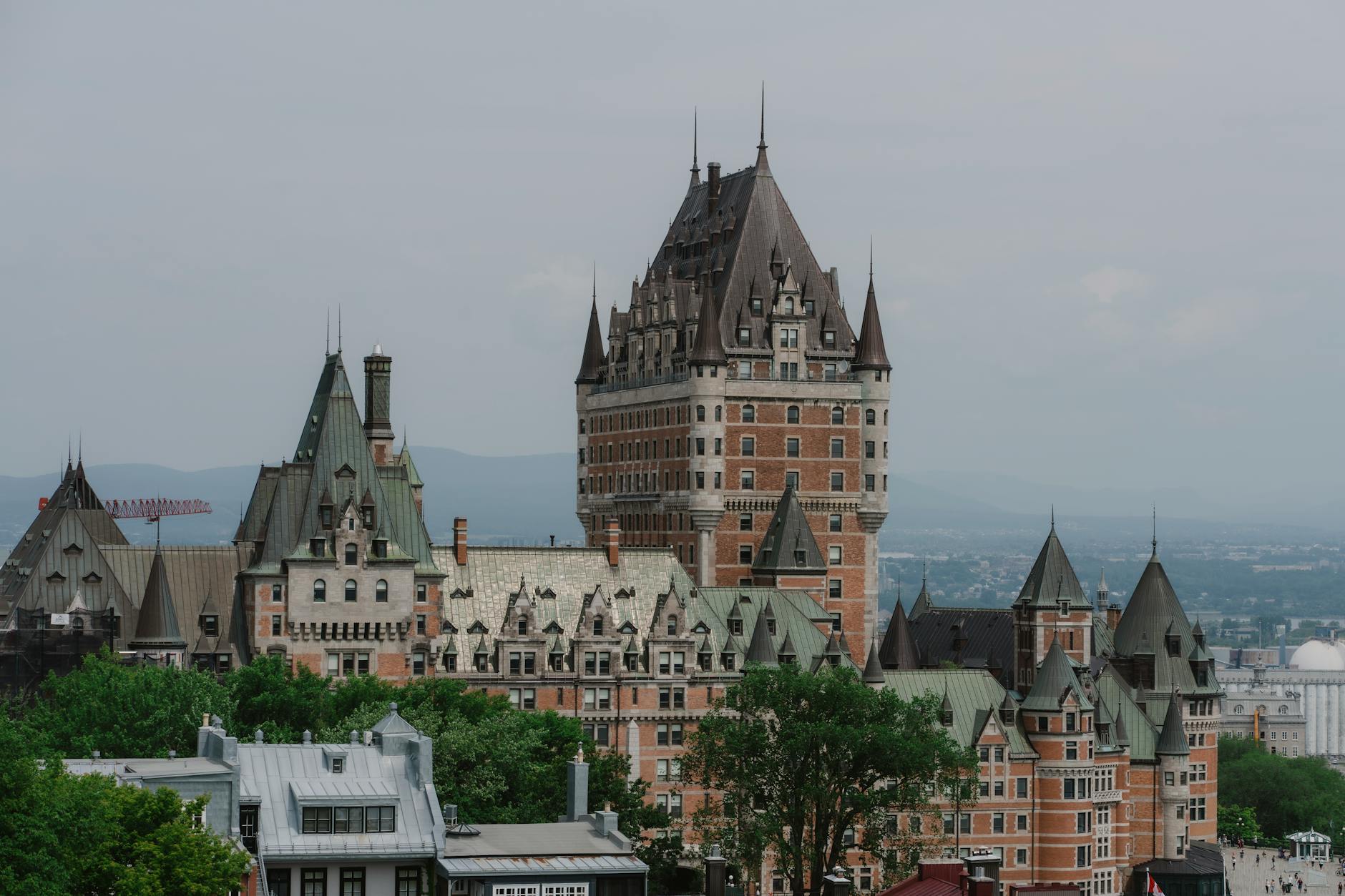
The wide wooden boardwalk of Dufferin Terrace sits beneath the historic hotel towers of Château Frontenac. Château Frontenac was built as a classic historic hotel. The boardwalk overlooks the St. Lawrence River and provides access to the Saint-Louis Forts and Châteaux National Historic Site ruins buried beneath the terrace surface.
2. Fortifications of Québec and La Citadelle
Parks Canada manages the Fortifications of Québec National Historic Site encompassing the historic city walls. You can walk along preserved ramparts, gates, and artillery positions. Prominently positioned on Cap Diamant sits La Citadelle de Québec. The Citadel of Quebec is an active military garrison and the official residence of the Governor General of Canada in Quebec. Guided tours cover Canadian military history and offer elevated viewpoints across the river basin.
3. Place Royale and Quartier Petit-Champlain
In Lower Town, Place Royale marks the historic site of Samuel de Champlain's 1608 settlement. The stone buildings surrounding the plaza house local shops and cafes, alongside Notre-Dame-des-Victoires church. Nearby Rue du Petit-Champlain is a pedestrian-only lane lined with boutiques. Our advice: visit early in the morning for quiet photography and easier walking before the tour groups arrive.
4. What to skip or re-evaluate
First-time visitors often over-index on commercial souvenir shops along Rue Saint-Jean inside the walls. While the street itself is historic, the shop offerings repeat quickly. Instead, walk west along Rue Saint-Jean past the Saint-Jean Gate into the Faubourg Saint-Jean neighbourhood, where locals shop at artisanal bakeries, grocery shops, and neighborhood bistros.
For a structured 48-hour plan, see our detailed Quebec City Weekend Guide.
Costs, passes, and budgeting
Quebec City allows for a wide range of travel budgets depending on how you handle lodging and dining.
- Free activities: Walking the historic ramparts, strolling Dufferin Terrace, exploring Place Royale, visiting the Parliament Building gardens, and wandering neighbourhood streets cost nothing.
- Ticketed attractions: Museums, guided Citadel tours, cable cars, and the funicular require paid admission. Museum multi-passes or seasonal cultural cards exist for travellers visiting several institutions; check museum websites for combined ticket options.
- Dining budgets: Lunch menus (formule midi) at traditional French bistros offer lower price points for multi-course meals compared to evening dinner service.
Families and travelling with children
Quebec City is welcoming for families, but physical geography presents practical challenges for parents with young kids.
- Strollers versus carriers: Pushing a stroller over historic cobblestones and up steep outdoor staircases is tiring. We recommend bringing a lightweight, durable stroller with large wheels, or using a baby carrier for Lower Town exploration.
- Kid-friendly spaces: The Plains of Abraham park provides open grass fields, playgrounds, and space to run. Montmorency Falls Park features wide paved walking paths and a cable car ride that appeals to children.
- Pacing: Limit steep hill walking to once or twice per day by using public transit or the funicular to return to your hotel level.
Accessibility: Navigating hills and cobblestones
Quebec City's 17th-century layout presents real accessibility barriers, but modern infrastructure helps bridge the gaps.
- Level differences: The Funiculaire du Vieux-Québec provides a step-free connection between Dufferin Terrace and Basse-Ville. However, some access paths approaching the funicular stations involve slight inclines or cobblestone sections.
- Public transit: Low-floor accessible buses operated by Réseau de transport de la Capitale serve main city routes. Check the transit authority's accessibility page for specific vehicle and stop features.
- Attractions and museums: Major cultural institutions like the Musée national des beaux-arts du Québec and the Musée de la civilisation feature ramp and elevator access. Historic sites like the Fortifications ramparts involve steep stone stairs without elevator alternatives.
Where to stay and eat by neighbourhood
Understanding neighbourhood boundaries helps you pick the right base for your trip.
- Haute-Ville (Inside the Walls): Best for first-timers who want immediate walking access to sights, restaurants, and views. Hotels here are often housed in heritage buildings with smaller room layouts.
- Basse-Ville & Old Port: Ideal for travellers seeking boutique hotels along flat terrain near the river and antique district.
- Saint-Roch & Saint-Jean-Baptiste: Great options for repeat visitors or budget-conscious travellers. These neighbourhoods west of the walls feature active dining corridors, indie coffee shops, and local residential charm.
To research broader regional options across the province, browse our full Quebec provincial guide and main Quebec City destination hub.
What to know before you go: Language and practical rules
- Language expectations: French is widely spoken in Quebec. In tourist zones like Vieux-Québec, hotel and restaurant staff speak fluent English. Making a polite effort with basic French greetings ("Bonjour", "Merci") is appreciated by locals.
- Footwear matters: Leave smooth-soled dress shoes at home. Cobblestones and stone steps demand supportive walking shoes with non-slip soles.
- Restaurant reservations: We find that popular bistros in Upper Town and Saint-Roch can fill up quickly for dinner. Book tables in advance online rather than relying on walk-in availability during summer and holiday weekends.
Questions travellers ask
- Do I need to speak French to visit Quebec City?
- No. In tourist areas like Vieux-Québec, hotel and restaurant staff speak English. A simple French greeting like 'Bonjour' is appreciated but not mandatory for everyday interactions.
- Do I need a car in Quebec City?
- No car is needed if you stay in Upper Town, Lower Town, or Saint-Roch. Driving inside the historic walls is difficult, and public transit or walking handles central sights easily.
- How long should a first-time visitor stay in Quebec City?
- Two to three days is ideal for a first visit. That allows enough time to explore Upper and Lower Town historic sites, walk the ramparts, and take a day trip to Montmorency Falls.
- How much does it cost to visit Quebec City attractions?
- Walking the city ramparts, Dufferin Terrace, and historic plazas is free. Museums, guided fort tours, and the funicular require paid admission; check official operator sites for current ticket pricing.
Sources & official links
Check before you go
- Ville de Québec Official Tourism Portal
Official municipal tourism information, event calendars, and visitor centers.
- Parks Canada - Fortifications of Québec
Official national historic site details, guided tour information, and wall maps.
- Réseau de transport de la Capitale (RTC)
Public transit routes, schedules, accessibility information, and fare options.
- VIA Rail Canada - Montreal to Quebec City
Train schedules and booking for service between Montreal and Gare du Palais.
- Société des traversiers du Québec
Ferry schedule and terminal details for the Quebec City-Lévis St. Lawrence river ferry.
Keep reading
- Quebec City in Summer: Things to Do and Planning Guide
- Quebec City with Kids: Practical Family Guide
- Quebec City in Winter: Things to Do and Planning Guide
- Quebec City Weekend Guide: 2-Day Old Quebec & Beyond Itinerary
- Things to Do in Quebec City: Practical City Guide
- Ottawa for First-Time Visitors: Planning Guide and First-Hand Advice